FEBS Letters - 2026- Diversity and complexity in neural organoids

Abstract
The complexity of human neurobiology is influenced by its heterogeneity, reflected in both cell type diversity as well as genetic variations between individuals. Neural organoids are 3D developing neural tissues designed to mimic development of the nervous system; however, most currently fail to capture this diversity.
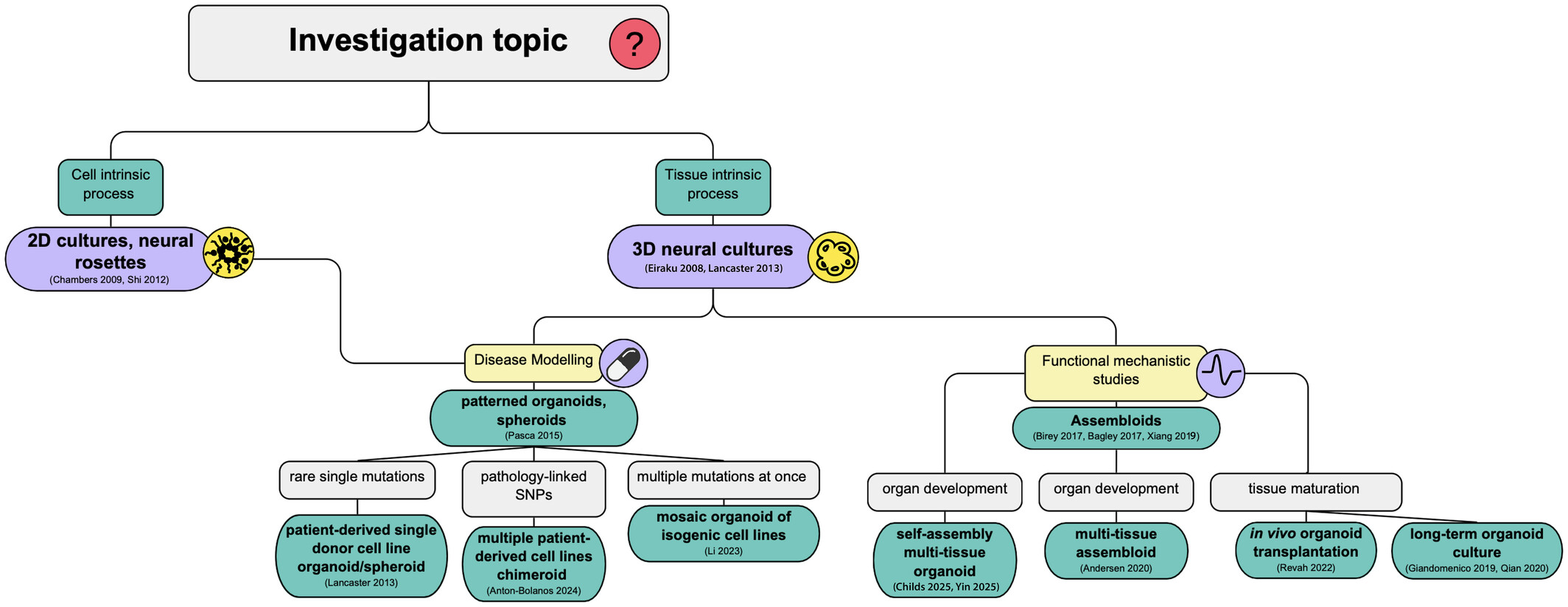
Recent advances have focused on increasing complexity through self-organised multi-region organoids, assembloids and chimeroids. Here, we discuss these approaches, as well as the remaining lack of genetic and ethnic diversity in neural organoid research, its impact on the generalizability of findings, and strategies to address this gap. We provide a flowchart to guide the experimenter towards the choice of model and discuss applications of neural organoids that benefit from complexity or reliability.
Chiaradia I, Lancaster MA. Diversity and complexity in neural organoids. FEBS Lett. 2026 Apr 24. doi: 10.1002/1873-3468.70329. Epub ahead of print. PMID: 42032900. Letter Edited by Meritxell Huch
https://febs.onlinelibrary.wiley.com/doi/full/10.1002/1873-3468.70329

Thank you for joining us here at WORC! This platform has the sole purpose of bringing Organoid and Organ-on-a-chip researchers together! Easily connect, share content, ideas and experiences in this transformative area of science. The idea for this community came after speaking with many of you expressing the need for joined up thinking and making long lasting connections.



Please sign in or register for FREE
If you are a registered user on WORC.Community, please sign in