WORC Community Interview Summary-Dr Tamas Korcsmaros-Imperial Organoid Facility
Preview
With Dr Tamas Korcsmaros from the Imperial Organoid Facility. London, UK. In this WORC.Community interview, Dr Tamas Korcsmaros discusses the development of the Imperial Organoid Facility, its recent acquisition of the ProMEPS™ organ-on-chip platform, and the future of human-relevant biomedical research.
The Imperial Organoid Facility
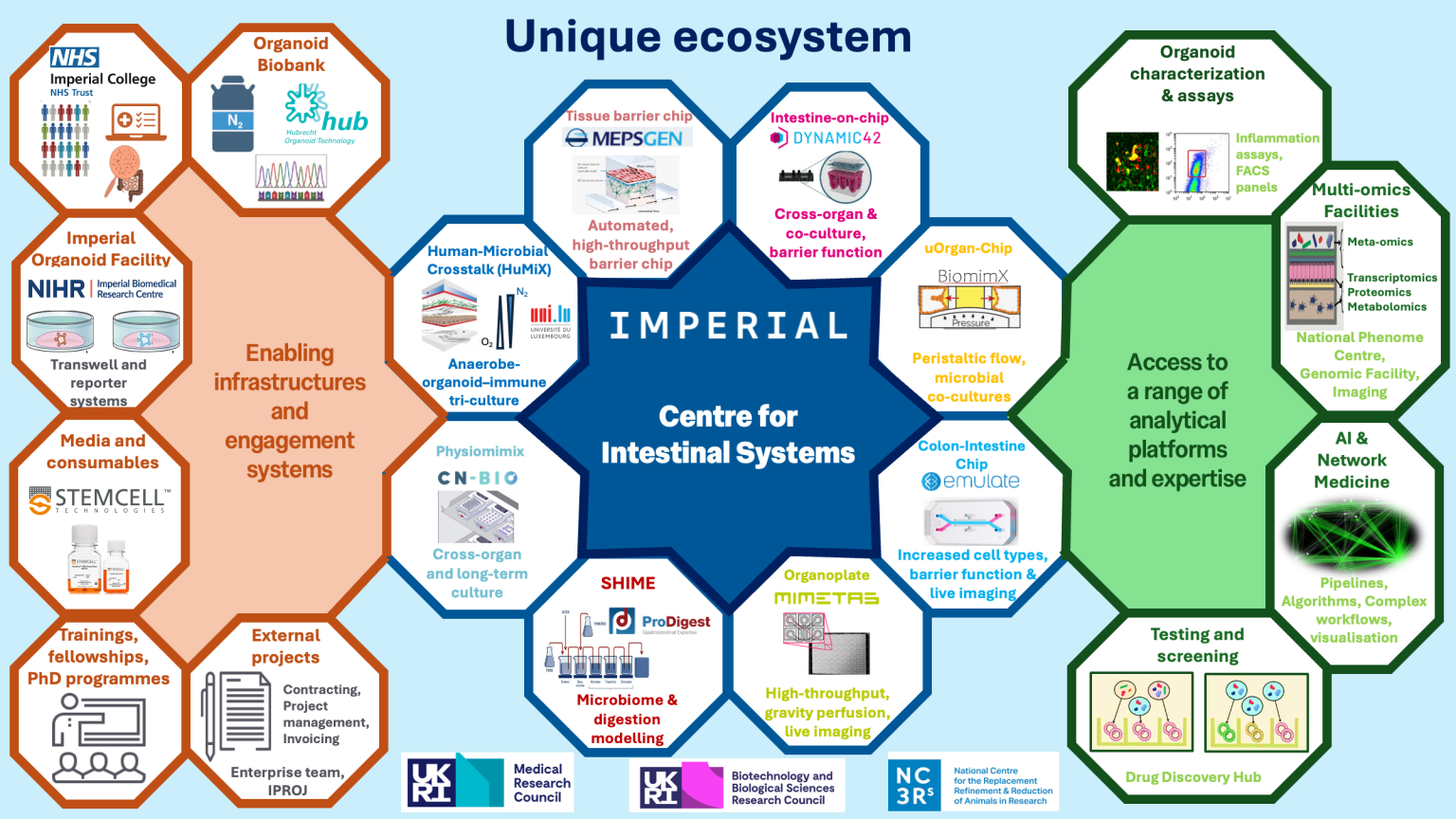
Tamas explains that the facility, launched three years ago after years of preparation, takes a disease- and tissue-agnostic approach to organoid research. Rather than focusing on a single organ system, it supports multiple organoid models and has established large-scale pipelines for collecting patient samples and creating patient-derived organoid models. A major focus has been building the infrastructure needed to make organoid research scalable and impactful. This includes:
- Ethical frameworks that allow patient samples to be used for both academic and commercial research.
- Large, dedicated laboratory spaces for organoid culture.
- Specialist facilities for microbiome studies and co-culture experiments.
- Integrated expertise spanning cell biology, engineering, imaging, and data analysis.
The facility has grown from two people to around ten full-time staff and supported by additional institutional specialists.
Why Organoids Matter
Tamas believes organoids and other advanced human-relevant in vitro models have the potential to transform medical research by providing more predictive and translationally relevant systems than traditional approaches. However, he stresses that success depends on solving practical challenges such as access to patient samples, clinical data integration, scalability, reproducibility, and collaboration with industry partners.
Acquisition of the MEPSGEN ProMEPS™ Platform
A major announcement discussed in the interview is Imperial's acquisition of the ProMEPS™ organ-on-chip system from the Republic of Korea company MEPSGEN. Tamas notes that this is the first installation of the system in Europe. He highlights several reasons for selecting the platform:
- It combines automation, reproducibility, and flexibility.
- It can run 32 chips simultaneously using automated liquid handling, reducing human variability.
- Researchers can customise the cellular composition of each chip, including epithelial cells, immune cells, fibroblasts, and microbes.
- The system supports complex barrier studies, particularly relevant to gut research and drug absorption studies.
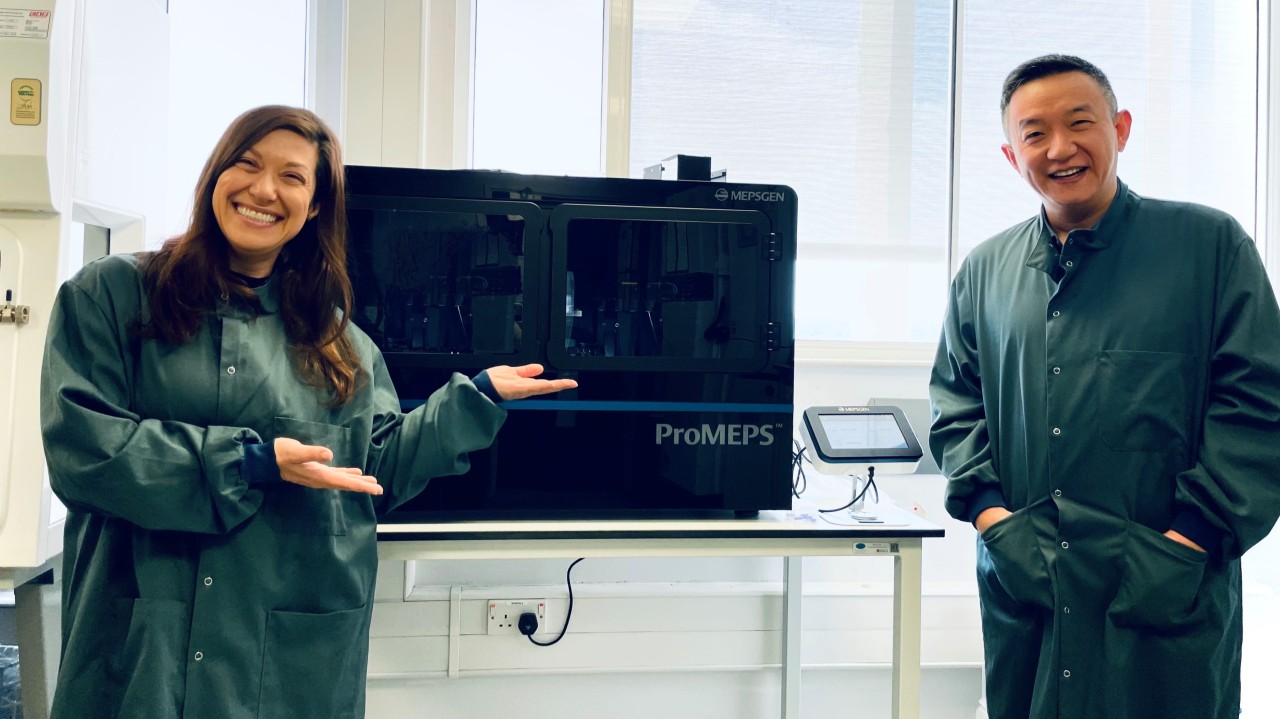
Dr Alexandra (Sasha) Berdichevski MEPSGEN and Dr David Ma, from the Imperial Organoid Facility.
“This ProMEPS™ system and the MEPSGEN barrier chips are making it possible to harness and to model the complexity of IBD in a realistic setting" Dr David Ma, Imperial.
The Importance of High Throughput
Although high-throughput technologies are often associated with pharmaceutical companies, Tamas argues they are equally valuable in academia. Miniaturised microfluidic systems reduce costs, require less biological material, and allow many experimental conditions to be tested simultaneously. This is especially important for organoid research, where running multiple conditions from the same patient sample improves experimental consistency and data quality.
Reproducibility and Replacing Animal Models
Tamas emphasises that advanced organoid and organ-on-chip systems are helping move research away from animal models toward more human-relevant approaches. Imperial's combination of patient samples, infrastructure, expertise, and multiple chip platforms enables researchers to select the most appropriate model for each scientific question, improving translational relevance and supporting regulatory goals for new approach methodologies (NAMs).
Supporting the Wider Research Community
A key goal of the facility is to provide access to technologies that many researchers cannot easily evaluate themselves. Because ProMEPS™ is currently only available at Imperial in Europe, the facility offers researchers the opportunity to test the platform, generate preliminary data, compare it against other systems, and determine which technologies best suit their needs. Tamas sees the facility as a hub for benchmarking and accelerating adoption of advanced in vitro technologies across academia and industry.
Future Vision
Looking ahead, Tamas says the facility's next phase is to expand beyond gastrointestinal research. Having established the infrastructure, ethics frameworks, partnerships, and workflows for gut organoids, the team plans to apply the same scalable model to other diseases and tissues over the next three years, creating a resource accessible to the wider UK academic and industrial research community.
Key Takeaway
Tamas presents the Imperial Organoid Facility as a national-scale platform designed to accelerate the adoption of organoids and organ-on-chip technologies. The acquisition of ProMEPS™ strengthens its ability to deliver reproducible, scalable, and human-relevant research models while providing researchers across the UK and Europe with access to cutting-edge experimental systems.
📧 Contacts:
Dr Tamas Korcsmaros OrgFac@imperial.ac.uk Imperial Organoid Facility Imperial College London, Commonwealth building, Imperial Hammersmith Campus Du Cane Road London, W12 0NN. UK
Dr Alexandra (Sasha) Berdichevski sberdichevski@mepsgen-us.com MEPSGEN 7F, Hanyang Tower 12, Beobwon-ro-11-gi, Songpa-gu, Seoul, Republic of Korea.

Thank you for joining us here at WORC! This platform has the sole purpose of bringing Organoid and Organ-on-a-chip researchers together! Easily connect, share content, ideas and experiences in this transformative area of science. The idea for this community came after speaking with many of you expressing the need for joined up thinking and making long lasting connections.
Please sign in or register for FREE
If you are a registered user on WORC.Community, please sign in