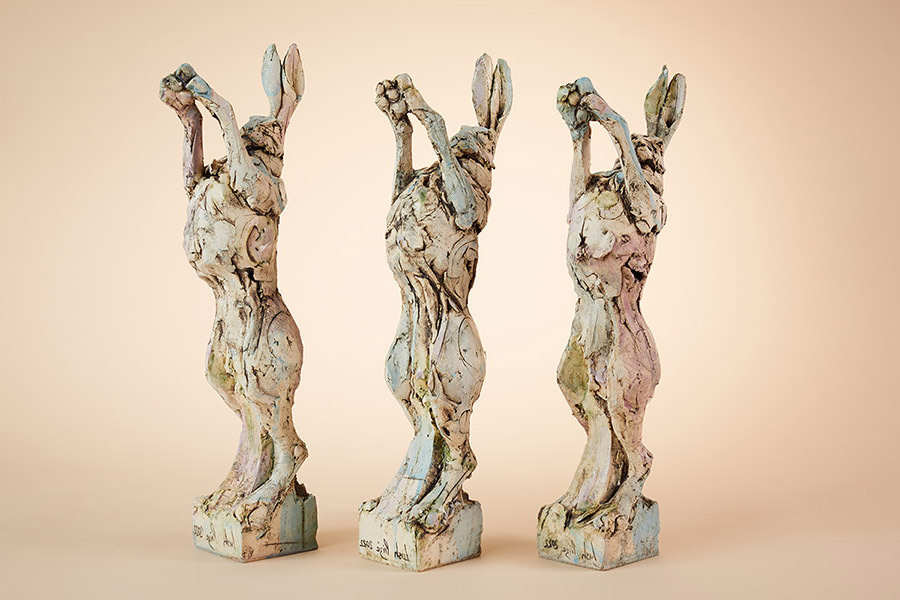
Jumping with EXCITEMENT and INSPIRATION! To see the nominees for the 2026 Lush Prize.
Congratulations to all and special call out to our supporters and Lush Award nominees CN Bio, Animal Free Research UK and MPSlabs ESQlabs joining us in Cambridge, UK in two weeks for WORD+2026! Last tickets and more
💡 🧫 The future is incredibly bright, these are the Young Researcher Prize Nominees:
Dr Fadoua El Abdellaoui Soussi
Cincinnati Children’s Hospital Medical Centre, USA
Combining AI and Human Organoids to Improve Animal-Free Drug Induced Liver Injury (DILI) Prediction
Dowlette-Mary Alam El Din
Johns Hopkins Bloomberg School of Public Health, USA
Learning-on-Chip Model as the Next Step of Human-Relevant Models for Developmental Neurotoxicity Testing
Dr Adam Fellows
Royal Veterinary College, UK
Bioengineered Arteries to Replace Animal Use in Cardiovascular Research
Dr Daniela Flores Gomez
Institute for Risk Assessment Sciences, Utrecht University, Netherlands
Advancing animal-free endocrine and immune toxicology: an in vitro serum-free 3D adipose-immune model
Nathalia Stephanie Oliveira Nascimento
Federal University of Minas Gerais, Brazil
EV-Proteomics: Animal-Free NAM Platform for Mechanistic Assessment of Genotoxicity and Carcinogenicity Risk
Dr Luiz Carlos Maia Ladeira
University of Liège, Belgium
S2TOX: Mechanistic Assessment of Cardiotoxicity using Integrated In Silico and In Vitro Modeling
Dr Gloria Melzi
Università degli Studi di Milano, Italy
Beyond S9 mix: a human liver-based model to replace animal testing in genotoxicity assessment
Dr Alicja Mikolajczyk
University of Gdansk and QSAR Lab Ltd, Poland
From QSAR to MINTOX and Nano-QSARmix: Computational Nanotoxicology for Animal-Free Joint Toxicity Assessment of Advanced Nano-Mixtures
Dr Kate Mintram
Brunel University London, UK
FishGAN: A Generative AI Model for Advanced Toxicity Prediction in Environmental Risk Assessments.
Dr Marion Revel
Eawag – Swiss Federal Institute of Aquatic Science and Technology, Switzerland
Describing the applicability domain of NAMs: a case study considering stakeholder perspectives to improve uptake of non-animal methods.
Jonne Rietdijk
Uppsala University, Sweden
Integrating multi-omics data to accelerate Adverse Outcome Pathway (AOP) development at scale
Dr Rahul Rimal
EMPA, Switzerland
Multi-compartment bioreactor-based models to mimic systemic toxicity in burns
Kristin Schüler
IST-ID – Institute of Bioengineering and Biosciences, Portugal
HER OA Model- Animal-origin free Female Endocrine Osteoarthritis Model for Personalized Therapy Screening
Dr Viola Sgarminato
Politecnico di Torino, Italy
Exocrine Pancreas In Vitro Complex (EPIC) Model: An Innovative, Fully Animal-Free Tool for Advancing Cancer Research
Dr Nicoleta Spînu
AI4Cosmetics, Netherlands
AI Copilot for Safety Assessment of Cosmetic Ingredients
Minh Tran
Sungkyunkwan University, South Korea
Humanized Gut–Brain–Vascular (hGBV)-on-a-Chip for Bidirectional Toxicology Screening in Gut-Neuropathogenesis
Last chance to join WORD+2026 here

Thank you for joining us here at WORC! This platform has the sole purpose of bringing Organoid and Organ-on-a-chip researchers together! Easily connect, share content, ideas and experiences in this transformative area of science. The idea for this community came after speaking with many of you expressing the need for joined up thinking and making long lasting connections.

Please sign in or register for FREE
If you are a registered user on WORC.Community, please sign in