From the Editor: "From Models to Machines – Why Organoids Are Becoming Infrastructure, Not Just Insight"
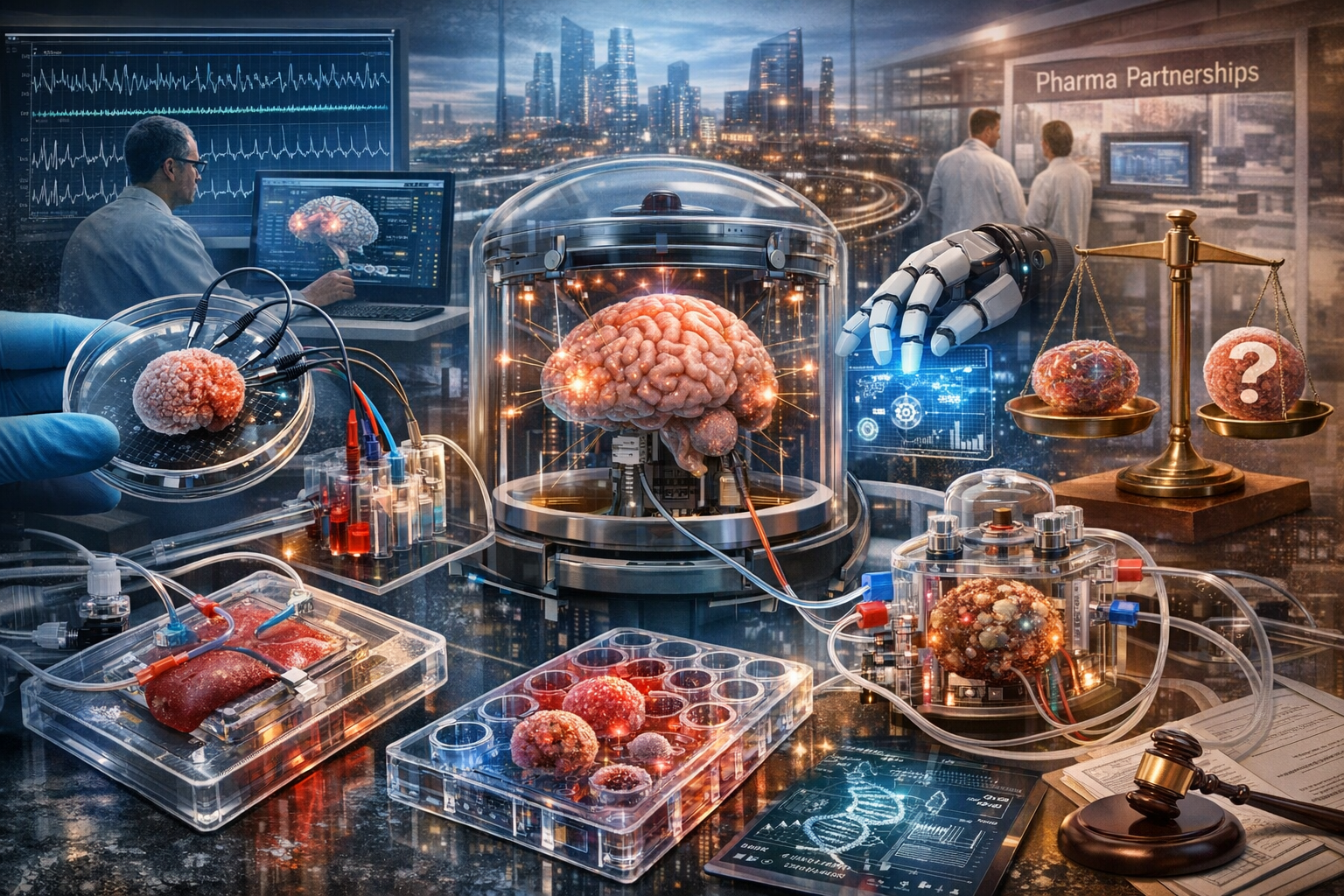
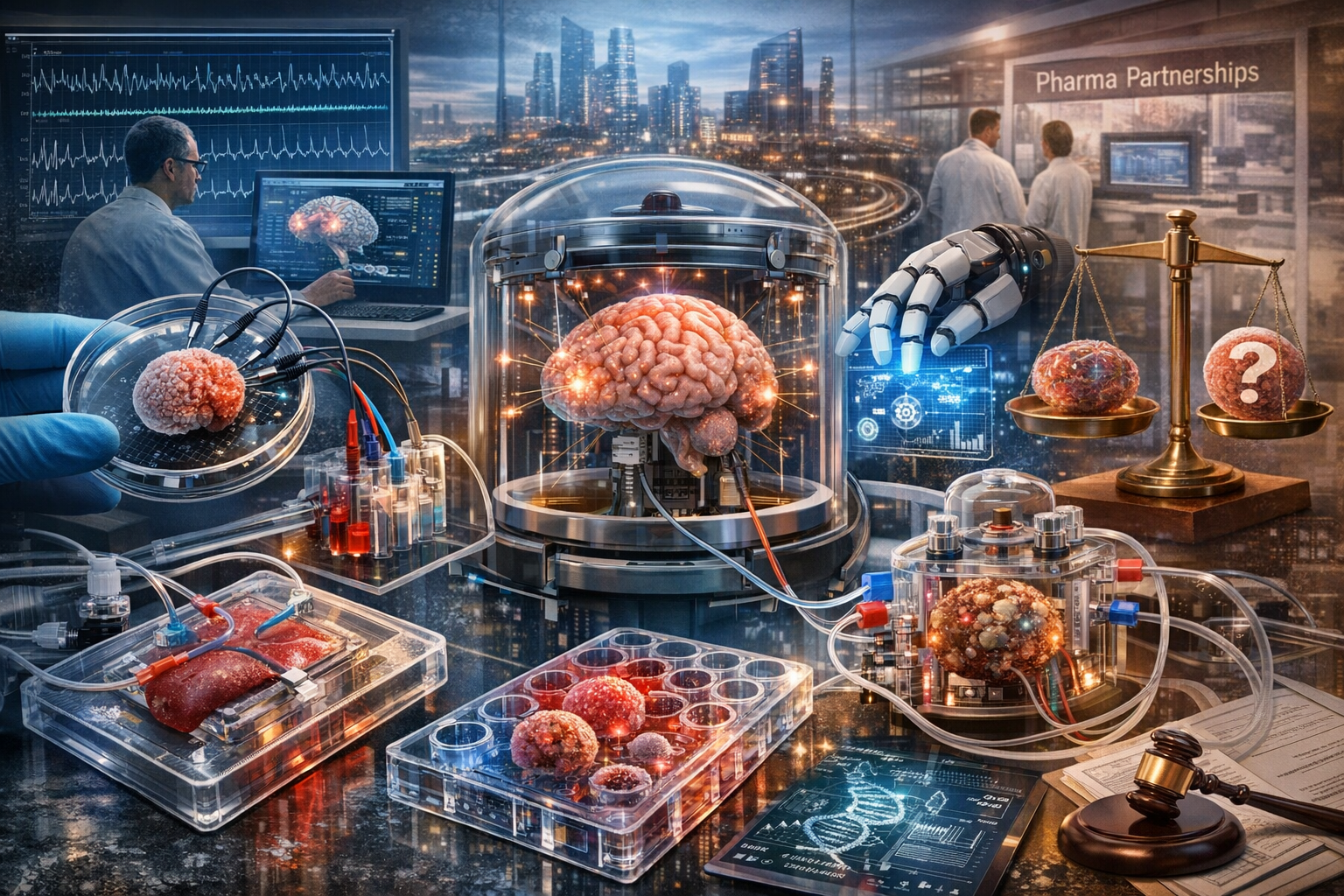
For over a decade, organoids have been framed as better models. More human, more predictive, more relevant than the systems they aim to replace. That framing is now too narrow.
A wave of recent research suggests something more fundamental is happening. Organoids are evolving from tools of observation into platforms of function. They are no longer just helping us understand biology. They are beginning to do biology, in ways that blur the boundaries between model, system, and machine.
The Quiet Leap in Biological Realism
At the core of this shift is a step-change in biological fidelity. Across multiple recent studies, organoids are no longer simple, single-lineage constructs. They are becoming multi-cellular, multi-functional systems that integrate immune, vascular, and stromal components into coherent, interacting environments.
This matters because the long-standing criticism of in vitro biology has not been capability, but translation. The gap between what works in the lab and what works in humans has persisted despite decades of innovation. Organoids are beginning to close that gap, not incrementally, but structurally.
More mature brain, liver, and tumour organoids are now demonstrating functional outputs – electrophysiology, metabolism, drug response – that increasingly mirror human physiology. The implication is clear: we are moving closer to systems that are not just representative, but predictive.
From Static Models to Living Systems
At the same time, engineering is reshaping what organoids can be. The convergence with microphysiological systems, from organ-on-chip platforms to embedded sensors and controlled microenvironments, is transforming organoids from static cultures into dynamic, interactive systems.
We are at a conceptual inflection point.
When you combine living tissue with controlled perfusion and mechanical cues, plus real-time sensing and feedback, you no longer have a model. You have a system.
And systems behave differently. They can be perturbed, monitored, and iterated in ways that begin to resemble not just biology, but infrastructure. Platforms upon which experiments, therapies, and even decisions can be built.
Organoid Intelligence: Beyond Science Fiction
Perhaps the most provocative development is the emergence of organoid intelligence (OI). What was once speculative is now the subject of serious experimental work. Brain organoids that can be stimulated, trained, and that exhibit forms of adaptive response.
The promise here is not that organoids will replace silicon. It is that biology may offer an alternative computational paradigm. One defined by plasticity, communication, and extraordinary energy efficiency.
But the field is still fragile. Signal interpretation is inconsistent. Reproducibility is limited. And the distance between “responsive neural tissue” and anything resembling cognition remains vast.
Yet, even in its infancy, organoid intelligence is forcing a rethink. If biological systems can compute, even in constrained ways, then organoids are not just models of the brain; they may begin to serve as biological processors.
Drug Discovery’s Slow Pivot Becomes a Strategic Shift
While the headlines gravitate toward brain organoids and computing, the most immediate impact remains in drug discovery, and here the shift is already underway.
Pharma is no longer experimenting at the edges. It is investing. Partnerships, acquisitions, and platform-building efforts point to a growing consensus: organoids are not a complementary tool; they are becoming central to how human biology is modelled preclinically.
The value proposition is straightforward:
- Better prediction of efficacy
- Earlier detection of toxicity
- Reduced reliance on animal models
- Pathways to patient-specific testing
What is changing is confidence. Organoids are moving from ‘promising but variable’ to ‘imperfect but indispensable’.
Ethics Is No Longer Hypothetical
However, with capability comes complexity, and nowhere is that more visible than in the ethical landscape.
As brain organoids become more sophisticated, questions that once felt distant are becoming immediate:
- At what point does neural complexity carry moral weight?
- Who owns patient-derived biological systems that can be expanded indefinitely?
- How should regulators classify systems that are neither model nor organism?
The challenge is not just answering these questions. It is doing so before the technology outpaces governance. Unlike previous biomedical innovations, organoids sit at the intersection of life, identity, and, increasingly, cognition.
The Bottleneck Ahead: Standardisation
For all the progress, one constraint continues to shadow the field: reproducibility.
Variability in protocols, materials, and readouts remains a barrier to scale. Without standardisation, the promise of organoids, particularly in regulated environments like drug development, cannot be fully realised.
Encouragingly, this is now a recognised priority. Industry groups, consortia, and emerging standards bodies are beginning to define benchmarks, reference materials, and validation frameworks.
This may not be the most visible part of the field, but it is arguably the most important. Without it, organoids remain powerful but fragmented. With it, they become infrastructure.
From Insight to Infrastructure
Taken together, these trends point to a deeper shift in how organoids should be understood.
They are no longer just better cell culture, just alternatives to animal models or just tools for biological insight. They are becoming platforms for human-relevant experimentation, components of integrated biological systems and, potentially, substrates for entirely new forms of computation.
It is this transition, from tool to platform, from model to system, that will define the next decade.
The real question is not whether organoids will transform research. It is whether the surrounding ecosystem, including standards, regulation and industry adoption, can evolve quickly enough to support what they are becoming.
Because if it can, organoids won’t just change how we study biology.
They will transform what we build with it.
Selected Source Articles:
[2] Alzheimer's Disease Brain Organoids as a Source of Disease Relevant Amyloid-Beta Oligomers
[4] Tumor organoids on-a-chip and the role of AI in predictive oncology and personalized cancer medicine
Community Question: At what point do organoids stop being “models” and become “infrastructure”; and what would need to change (scientifically, commercially, and from a regulatory standpoint) for us to treat them that way?
This new From the Editor feature will appear on the home page every Monday. To make sure you don’t miss it, please log into your account and update your notification preferences. Please share it, give feedback, and join the discussion! As these threads evolve they will become an important focal point for engagement across the community - I hope you enjoy it!


Chief Editor
A career deeply rooted in drug discovery and a focus on digital transformation and innovation in drug discovery.