'Tech Highlight': Digital Organoids - Engineering Ground Truth for 3D Biological Imaging
.png)
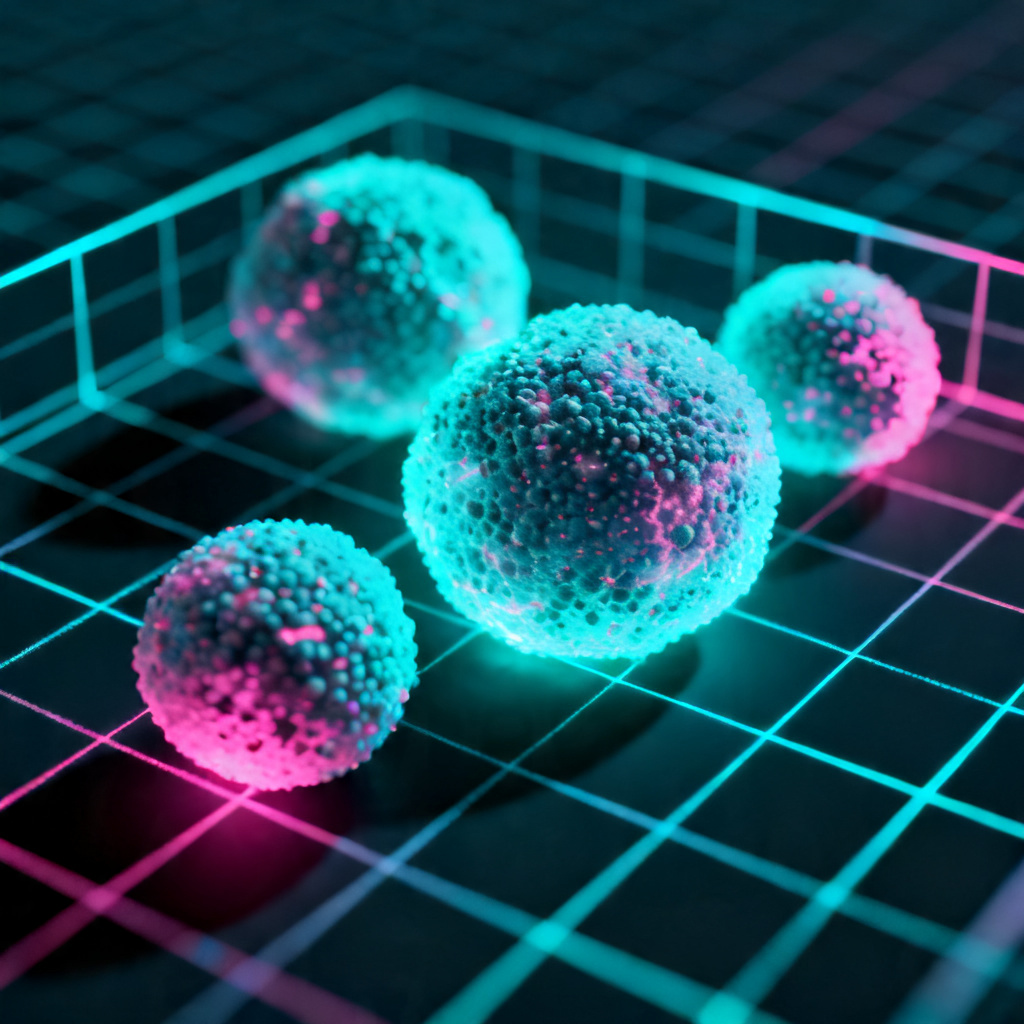
Three-dimensional organoid systems have rapidly become central to modelling human tissue biology, disease progression, and drug response. However, their increasing structural complexity has exposed a major bottleneck. The lack of scalable, high-quality annotated datasets for training and benchmarking 3D image analysis pipelines. This study addresses that gap by introducing a parametric, physics-based framework for generating synthetic 3D fluorescence organoid images with exact ground-truth annotations by construction.
Unlike data-driven generative approaches, the framework requires no training data. Instead, it builds organoids from first principles using force-directed sphere packing for cell placement, Laguerre power-diagram tessellation for cell morphology, and physically motivated optical modelling for image formation. This allows full, interpretable control over biological structure and imaging conditions, while simultaneously producing voxel-level labels for both cell bodies and nuclei [1].
A key strength of the model lies in its ability to reproduce hallmark organoid architectures. A hollow lumen exclusion system enables cyst-forming epithelial structures, while a necrotic core module introduces biologically realistic gradients of cell death, including pyknotic, ghost, and karyorrhectic nuclear phenotypes. Additional refinements model apical–basal polarity, membrane curvature, and spatially varying nuclear eccentricity, producing gradients of organisation that mirror real-world epithelial and tumour tissues.
On the imaging side, the framework incorporates a depth-dependent point spread function (PSF), staining diffusion gradients, attenuation, haze, noise, and channel crosstalk, enabling realistic simulation of confocal fluorescence microscopy in thick 3D tissue. Importantly, each voxel-level transformation is analytically linked to the underlying cell geometry, ensuring that optical degradation does not break ground-truth correspondence.
Five biologically calibrated presets spanning pancreatic ductal adenocarcinoma (PDAC), mammary epithelial cysts, and stress conditions demonstrate the system’s versatility. Across these examples, the synthetic datasets reproduce key morphometric and spatial topology features observed in real organoid imaging studies, including nuclear volume shifts under osmotic stress and sharp structural segregation between solid and cystic architectures.
Beyond realism, the framework functions as a computational testbed for imaging analysis pipelines. Because every cell boundary, nucleus and phenotype is known exactly, segmentation and morphometry tools can be benchmarked with full ground truth; something which is fundamentally impossible with experimental datasets. This enables systematic evaluation of failure modes such as under-segmentation in dense regions or topological misclassification in hollow structures.
The study also highlights an important conceptual shift. Rather than treating synthetic data as augmentation, this framework positions it as a primary source for hypothesis testing, algorithm validation, and experimental design in silico. Organism-scale complexity can be systematically deconstructed, recomposed and stress-tested under controlled parameter changes.
By combining biological probability, optical pragmatism, and precise annotation, this work establishes a bridge between computational modelling and experimental imaging, effectively turning organoids into fully programmable digital tissues for next-generation quantitative biology.
[1] A voxel, short for volumetric pixel, is a 3D data point or cubic unit representing a value on a regularly spaced, three-dimensional grid, functioning as the 3D equivalent of a 2D pixel. Used extensively in 3D modelling, medical imaging (CT/MRI), and game development, it defines spatial information, such as colour, density or opacity.
Source Link: https://doi.org/10.64898/2026.04.16.719066
The Tech Highlight is a weekly feature, intended as a short, focused piece of content that showcases a specific technology, innovation, or emerging trend. If you have any cool stuff that you think would be interesting to this community please share!
To make sure you don’t miss it, please log into your account and update your notification preferences. Please share it, give feedback, and join the discussion - I hope you enjoy it!


Chief Editor
A career deeply rooted in drug discovery and a focus on digital transformation and innovation in drug discovery.