'Tech Highlight': Nanoparticles in 3D – What Brain Organoids Reveal About Neuroexposure
.png)
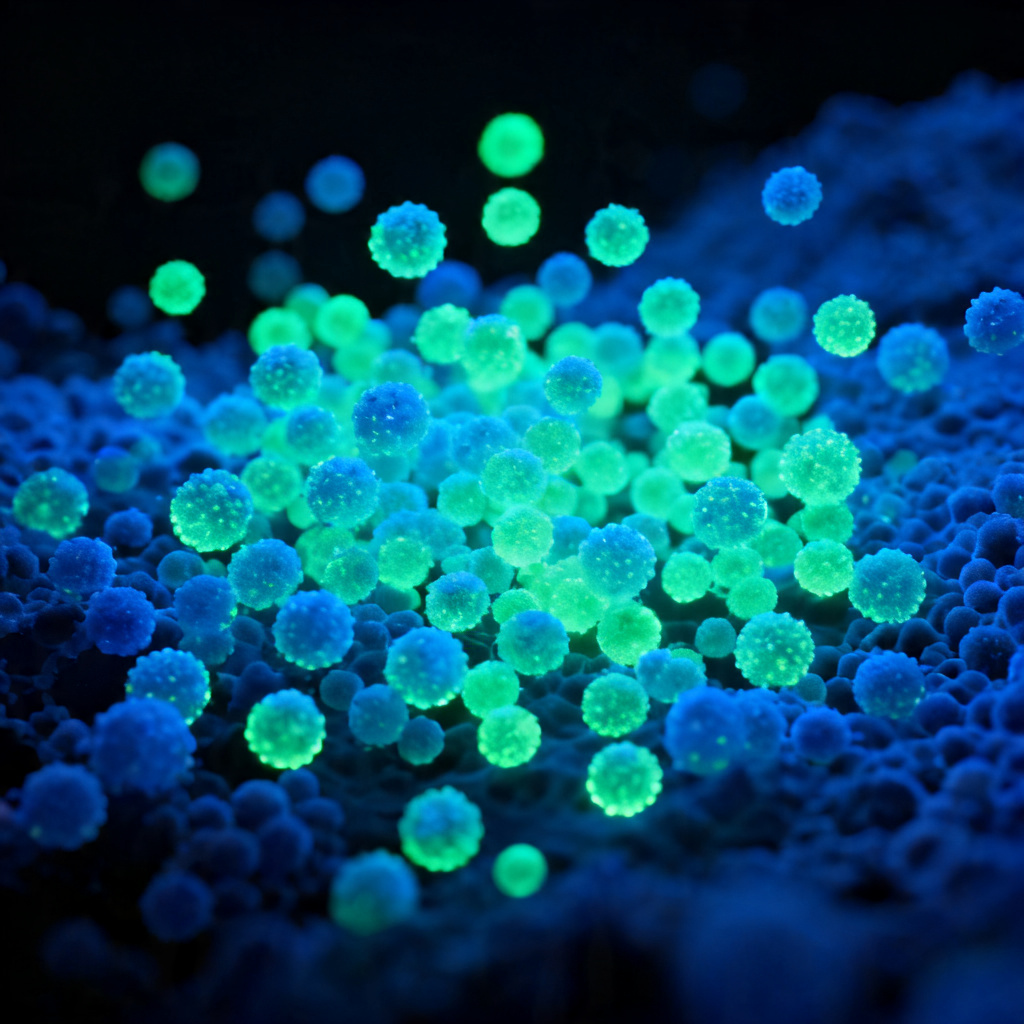
As nanomaterials become increasingly embedded in medicine, electronics, and consumer products, understanding how they interact with human biology is moving from theoretical concern to experimental necessity. A study published in RSC Advances (DOI: 10. 1039/D6RA01285J) offers a timely contribution, using brain organoids to probe how fluorescent carbon nanodots (CNDs) penetrate and distribute within complex neural tissue.
The central finding is both striking and instructive: CNDs can infiltrate brain organoids across all stages of maturation, dispersing throughout the 3D structure rather than remaining confined to surface layers. This contrasts sharply with traditional two-dimensional cell cultures, where uptake dynamics are often oversimplified and spatial constraints are minimal. In organoids, the nanoparticles encounter gradients of cell density, extracellular matrix, and differentiation states, yet still demonstrate robust penetration and cellular internalisation.
This matters because it reframes how we think about nanoparticle exposure in the brain. The ability of CNDs to traverse a multicellular, tissue-like environment suggests that nano-scale materials may access regions of the brain more readily than previously assumed, with implications for both nanomedicine delivery strategies and neurotoxicity risk assessment. In particular, the study highlights that uptake is not limited to a specific developmental window, indicating that both developing as well as more mature neural systems may be susceptible.
Beyond simple uptake, the work points toward active biological interactions between nanoparticles and neural cells. The observed internalisation suggests engagement with cellular transport mechanisms, raising questions about how such materials might influence intracellular processes, signalling pathways, or long-term cell viability. While the study focuses primarily on distribution, it sets the stage for deeper investigation into functional consequences, including potential impacts on neuronal activity, differentiation, and network formation.
Crucially, this research underscores the value of organoid systems as intermediates between reductionist and in vivo models. Brain organoids provide a level of architectural and cellular complexity that captures key features of human neural tissue, without the ethical and practical limitations of animal or human studies. In this context, they enable a more realistic assessment of how nanoparticles behave in a 3D, heterogeneous environment, one that more closely approximates those of the human brain.
The implications extend in two directions. For nanomedicine, the findings support the feasibility of designing nanoparticles capable of deep tissue penetration, potentially improving targeted drug delivery to neural tissues. For safety science, however, they raise equally important concerns about unintended exposure and accumulation, particularly as nanomaterials become more prevalent in everyday environments.
Ultimately, this study highlights a broader shift. Evaluating emerging technologies not in isolation, but within biologically relevant systems that capture complexity and context. By bringing nanoparticles into organoid models, researchers are beginning to map not just where these materials go, but how they might interact with the living systems they are designed, or destined to enter.
Source Link: https://doi.org/10.1039/D6RA01285J
The Tech Highlight is a weekly feature, intended as a short, focused piece of content that showcases a specific technology, innovation, or emerging trend. If you have any cool stuff that you think would be interesting to this community please share!
To make sure you don’t miss it, please log into your account and update your notification preferences. Please share it, give feedback, and join the discussion - I hope you enjoy it!


Chief Editor
A career deeply rooted in drug discovery and a focus on digital transformation and innovation in drug discovery.